A major milestone in home battery adoption
The recent 10 GWh milestone for home batteries marked a significant achievement for the program and a clear sign of strong market uptake. By 30 April 2026, more than 350,000 households, small businesses and community organisations had installed a battery under the Australian Government’s Cheaper Home Batteries Program. Almost half had also installed new or upgraded solar at the same time.
CESI 2025 suggested demand was already there
However, results from the Clean Energy Solutions Index suggested that interest in home batteries was already well established before the rebate.
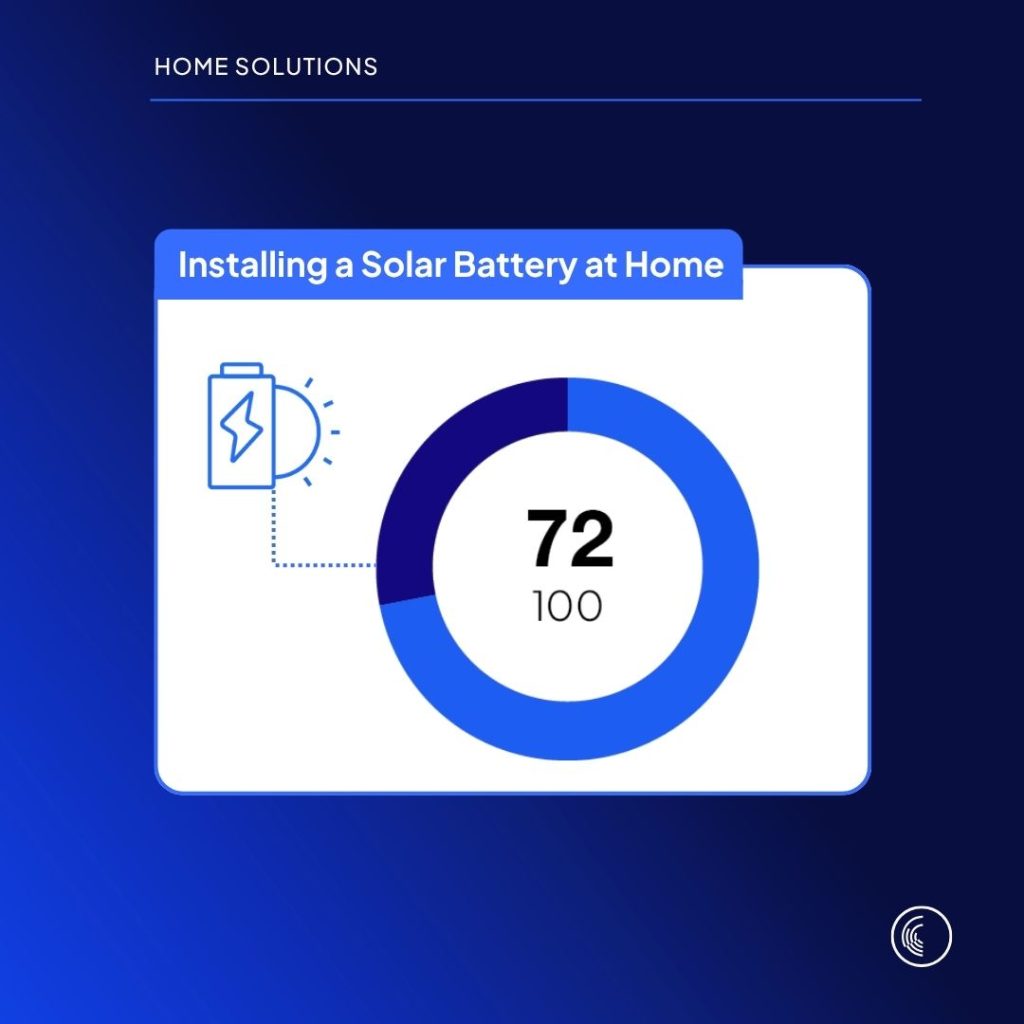
The Index measured deep support for 11 clean energy solutions using a composite one-number score based on four factors: personal support, whether a solution was seen as good for Australia, whether it was perceived to have community support, and willingness to speak positively about it.
- Home batteries scored 72 out of 100 in the Index, with strong results across each of the four measures:
- 75% said installing a solar battery at home was good for Australia
- 74% said they personally supported it
- 70% believed their local community would support it
- 69% said they would speak positively about it with family and friends
- Viewed through that lens, the rebate may have unlocked demand that was already there rather than created it from scratch.
The bigger constraint looked like cost, not sentiment
CESI 2025 also asked about uptake and consideration, and this showed the untapped demand for home batteries particularly clearly. While only 9% of Australians said they already had a solar battery, 51% said they had considered installing one.
This pointed to a large group of households that were already open to batteries but had not yet made the move. The reasons for support and opposition pointed in the same direction.
- Among supporters, 74% said batteries could save money on power bills and 59% valued storing power for later use and greater self-sufficiency.
- Among those opposed, the leading barrier was upfront cost at 60%, followed by concerns about risks at 52% and disposal at 51%
- Overall, the findings suggested that demand was present, but financial and practical barriers were still hindering adoption.
A category already primed for growth
Home batteries also appeared to occupy an important middle ground in CESI 2025. They did not attract the same depth of support as solar panels for homes, which scored 81 out of 100, but they performed well above electric vehicles at 44 and gas-free home conversion at 48.
This suggested that batteries had already moved beyond being a niche or unfamiliar proposition. Though they were not yet as established as rooftop solar, they appeared to sit in a category where support was already substantial and where policy could accelerate uptake.
Conclusion
Later this year, we will release CESI 2026. One of the most interesting questions will be whether the rebate changed not just uptake, but sentiment as well. It will be useful to see whether support for home batteries strengthened further, whether safety concerns softened, and whether adoption began to catch up with the strong consideration that CESI 2025 had already identified.
Only 9% of Australians said they already had a home battery, but 51% said they had considered one.
Source note:
Findings are based on the Clean Energy Solutions Index 2025,
The Clean Energy Solutions Index was developed by 89 Degrees East in collaboration with Boundless.
Relevant data points used here include the national support score, solution-level support scores, and key drivers and barriers for home solar and home batteries.