
Key Findings
The first Clean Energy Solutions Index reveals widespread support for clean energy technologies across Australia
Our methodology allows for deeper analysis of the data to uncover drivers of support and barriers to adoption of clean energy technologies.
Read on for key findings and analysis from the 2025 Index, including a breakdown of the four key metrics.

What does the Clean Energy Solutions Index 2025 tell us?
National score
The overall one-number Support Score measuring deep support for the 11 clean energy solutions is 60 out of 100
This deep support score is a strong foundation for building positive public sentiment and for lifting overall support towards a score of 70 over the next five years.
“As the energy transition continues and Australians become more and more familiar with things like green steel and electric vehicles, we expect deeper support to grow.”
– Dr Rebecca Huntley, Director of Research, 89 Degrees East
Support for clean energy solutions
Each of the 11 clean energy solutions has its own support score which is derived from the 4 key metrics.
Installing solar panels at home consistently ranks as the most widely supported solution across all categories.
This reflects the finding that Australians are more willing to support proven, visible solutions over those that may still feel aspirational.
Use the tabs to see all solutions.
Across nearly all Home Solutions, the upfront cost is a commonly cited reason for opposition. Cost to the taxpayer is a driver of the lower levels of support for infrastructure.
While many Australians personally support each Infrastructure Solution, their perception of community support for onshore and offshore wind farms for instance, often lags behind.
Australians are consistently less likely to advocate for Industry Solutions despite their personal support for manufacturing renewable components and building renewable transmission lines, for instance.
Home solutions
Installing solar panels at home
Installing solar panels at home garners the strongest support of all solutions.
Installing a solar battery at home
Solar batteries enjoy strong support but face concerns about both costs and safety.
Electric vehicle purchase
Buying an Electric Vehicle (EV) had the lowest support of all 11 clean energy solutions included in the Index.
Converting your home to be free from gas
Many Australians are resistant to the possibility of a gas-free home.
Infrastructure solutions
Building renewable energy transmission lines
Although upgrades are widely seen as essential, transmission lines remain one of the more divisive solutions.
Building solar farms
Solar farms are well supported, at higher levels than other infrastructure solutions.
Building onshore wind farms
Onshore wind farms are broadly supported as a way to harness Australia’s abundant renewable resources.
Building offshore wind farms
Despite perceptions of community support often being the contrary, support for offshore wind trails only slightly behind onshore wind.
Industry solutions
Converting factories and industry to be free from gas
Compared to other industry solutions, gas-free factories and industries face resistance from the Australian public.
Establishing a green metals industry in Australia
Establishing a green metals industry is supported largely for its long-term economic potential.
Manufacturing renewable energy components in Australia
Manufacturing of renewable energy components enjoys strong support due to its perceived economic potential.
State results
The one-number support score for each state was at least 57 or higher.
The highest support scores were recorded in Western Australia and Tasmania.
Overall support
Home solutions
Solar panel installation
Solar battery installation
Electric vehicle purchase
Gas-free home conversion
Industry solutions
Renewable energy transmission
Solar farms
Offshore wind farms
Onshore wind farms
Industry solutions
Gas free industry conversion
Renewable energy components manufacturing
Green metals industry
Overall support
Home solutions
Solar panel installation
Solar battery installation
Electric vehicle purchase
Gas-free home conversion
Industry solutions
Renewable energy transmission
Solar farms
Offshore wind farms
Onshore wind farms
Industry solutions
Gas free industry conversion
Renewable energy components manufacturing
Green metals industry
Overall support
Home solutions
Solar panel installation
Solar battery installation
Electric vehicle purchase
Gas-free home conversion
Industry solutions
Renewable energy transmission
Solar farms
Offshore wind farms
Onshore wind farms
Industry solutions
Gas free industry conversion
Renewable energy components manufacturing
Green metals industry
Overall support
Home solutions
Solar panel installation
Solar battery installation
Electric vehicle purchase
Gas-free home conversion
Industry solutions
Renewable energy transmission
Solar farms
Offshore wind farms
Onshore wind farms
Industry solutions
Gas free industry conversion
Renewable energy components manufacturing
Green metals industry
Overall support
Home solutions
Solar panel installation
Solar battery installation
Electric vehicle purchase
Gas-free home conversion
Industry solutions
Renewable energy transmission
Solar farms
Offshore wind farms
Onshore wind farms
Industry solutions
Gas free industry conversion
Renewable energy components manufacturing
Green metals industry
Overall support
Home solutions
Solar panel installation
Solar battery installation
Electric vehicle purchase
Gas-free home conversion
Industry solutions
Renewable energy transmission
Solar farms
Offshore wind farms
Onshore wind farms
Industry solutions
Gas free industry conversion
Renewable energy components manufacturing
Green metals industry
Index Metrics
The one-suport score for each solution is made up of four separate metrics: personal support, good for Australia, perceived support in local community and willingness to advocate. This data allows us to understand what may be driving support or what barriers exist for each solution.
Community perception often trails personal support

Community perception often trails personal support
While many Australians personally support each solution, their perception of community support often lags behind. This difference is most stark when it comes to infrastructure solutions, and in particular, wind farms.
Personal support does not necessarily translate into advocacy

Personal support does not necessarily translate into advocacy
While many Australians personally support clean energy solutions, they’re consistently less likely to speak positively about them with others. This gap is especially clear for industry and infrastructure solutions where knowledge may be lacking.
Analysis
Solutions that offer both climate and economic benefits, either at the national or household level, are especially well supported.
Clean energy solutions that are arguably well-known and that Australians have more experience with receive stronger support.
Solutions associated with solar attract higher levels of support.
Solutions associated with solar attract higher levels of support.
The support is tied to familiarity: the better Australians know a solutions, the more likely they are to back it.
Building familiarity has the potential to be a powerful driver of public support.

Solutions associated with domestic manufacturing enjoy higher levels of support.
Solutions associated with domestic manufacturing enjoy higher levels of support.
This reflects a broader appetite for solutions that deliver dual benefits: tackling climate change while strengthening Australian industry and creating jobs.
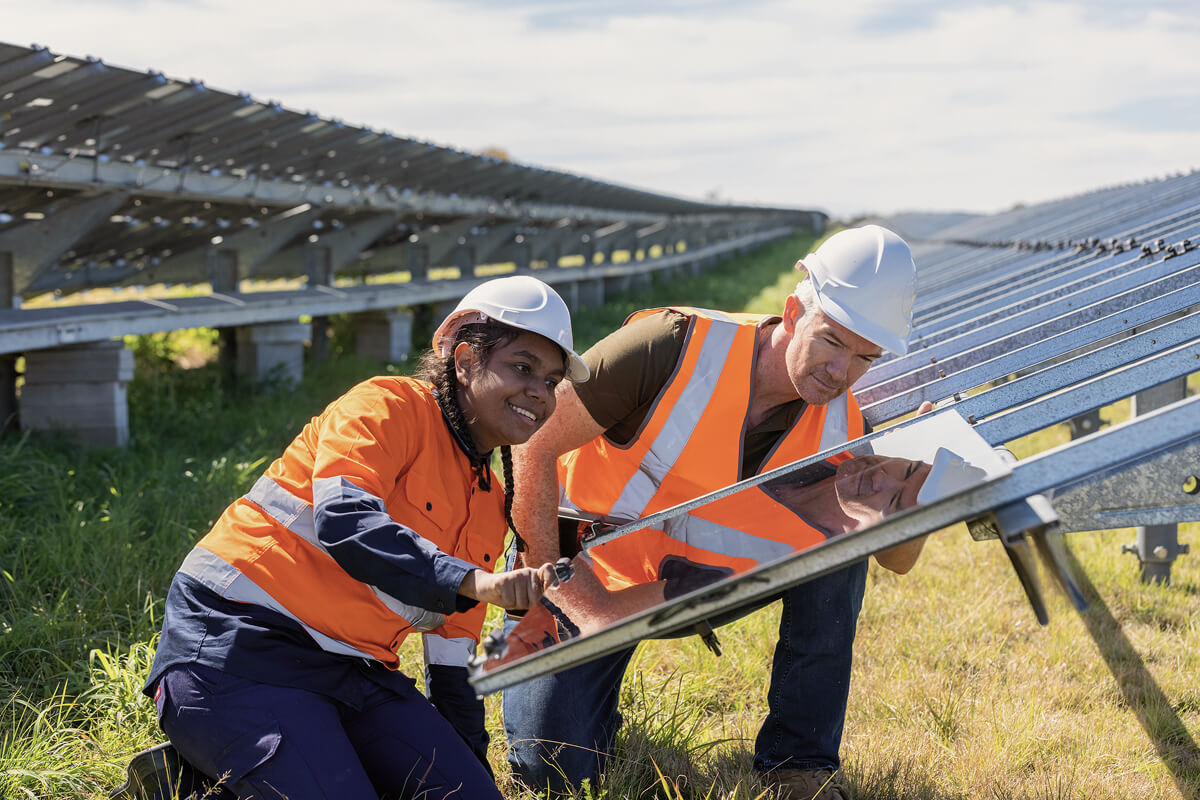
Any solution that requires a shift away from gas has somewhat less support.
Any solution that requires a shift away from gas has somewhat less support.
A lack of direct experience of electric alternatives appears to create uncertainty.
Just as familiarity drives support, unfamiliarity with electrification presents a barrier.

Read the latest report
The Clean Energy Solutions Index 2025 report provides a comprehensive overview of the data and insights.